Literature and Economics

This summer I had the chance to read a very interesting book Cents and Sensibility [Link] by Gary Saul Morson and Morton Schapiro. The authors make the case that the humanities, especially the study of literature, offer economists ways to understand better human behavior and emotions and thus make their models more realistic, their predictions more accurate, and their policies more effective and just.

I love this book because it makes me see things differently and reflect. In particular, I have learned that humanities can help economists to understand the role of cultural factors in shaping individuals’ character and thought. Literature can help economist to recognize the complexity of human motivations, thoughts and behavior (see for instance my previous post). Finally, humanities can provide ways to think through ethical questions, revealing the strengths and limitations of the economics perspectives.

If you are interested on this topic, I suggest you watch the book presentation:


Please note that this page contains affiliate links and any sales made through such links will reward me a small commission – at no extra cost for you. Thanks for your support!
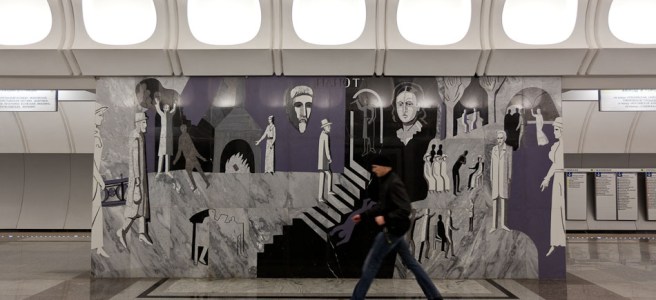


Notes from Underground

In June 2020 I was preparing the material for my summer school “Economics of Misbehavior” [Link] and I decided to read Dostoevsky’s short novel Notes from Underground [Link]. The principal character is a retired mid-level government bureaucrat living in St. Petersburg that cannot stop humiliating himself and embarrassing others. I love this book and I think it is a masterpiece of the literature and a must-read book for behavioral economists. In the first part of the novel, the underground man says that human beings are inconsistent and unknowable. They have no logic and their actions make little (or no) sense. In short, Notes from Underground describe human perversity and illogicality.

This novel is a nice contrast to “our” Rational Choice Theory that provides precise theoretical models to understand and predict human behavior. We assume that humans are rational beings and capable of conducting ourselves in logical ways. Dostoevsky hates the idea that if we strived to be more rational, we would stop acting in ways that harmed ourselves and society. He wrote that there are millions of instances where people have knowingly gone against choices that would bring them the greatest “utility” and well-being. To understand human (mis)behavior we need to understand that an individual is not a “sort of piano key or a sprig in an organ”. It is something more complex. 


Please note that this page contains affiliate links and any sales made through such links will reward me a small commission – at no extra cost for you. Thanks for your support!