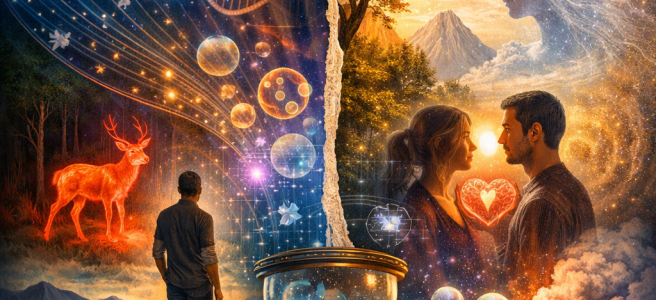
Noi esseri umani percepiamo il mondo attraverso un insieme limitato di sensi. Vista, udito, tatto, olfatto, gusto. A questi si aggiungono sistemi più sottili, come la propriocezione (percezione corporea interna) o il senso dell’equilibrio. Ma rimane un fatto fondamentale: ciò che chiamiamo “realtà” è, in larga parte, una costruzione basata su ciò che i nostri sensi riescono a captare e il nostro cervello riesce a interpretare.
La domanda allora diventa inevitabile: cosa ci stiamo perdendo?
Vediamo solo una piccola porzione dello spettro elettromagnetico. Non vediamo l’infrarosso, l’ultravioletto, le onde radio, i raggi X. Molti animali percepiscono dimensioni sensoriali che per noi semplicemente non esistono: campi magnetici, variazioni elettriche, vibrazioni impercettibili. Per un serpente, il mondo è anche fatto di calore. Per un uccello migratore, è attraversato da linee magnetiche. Per noi, no. Questo significa che la nostra esperienza del mondo non è una fotografia oggettiva, ma un’interfaccia evolutiva. I nostri sensi non si sono sviluppati per dirci “come è fatto l’universo”, ma per permetterci di sopravvivere e riprodurci. In altre parole, percepiamo ciò che è stato utile percepire.
Ma la limitazione non è solo sensoriale. È anche temporale. Non percepiamo direttamente i fenomeni che avvengono in microsecondi, né quelli che si sviluppano in milioni di anni. Siamo calibrati su una finestra temporale molto ristretta: quella della nostra scala di vita. La geologia, l’evoluzione, i processi cosmici esistono, ma non appartengono alla nostra esperienza immediata. Li comprendiamo attraverso modelli, strumenti, inferenze. Non li vediamo accadere.
C’è poi una limitazione più sottile: tendiamo a percepire oggetti, entità separate, confini netti. Un albero, un tavolo, una persona. Eppure, la fisica e la biologia suggeriscono che il mondo è fatto molto più di processi e relazioni che di oggetti stabili. Le “cose” sono nodi temporanei in reti di interazioni. Forse ciò che ci perdiamo non è solo informazione, ma un modo diverso di strutturare la realtà: meno centrato sugli oggetti, più sulle relazioni.
Un’altra zona d’ombra riguarda l’esperienza altrui. Non possiamo percepire direttamente la coscienza degli altri. Possiamo osservare comportamenti, ascoltare parole, inferire emozioni. Ma il vissuto soggettivo resta inaccessibile. È una parte della realtà che esiste, ma a cui non abbiamo accesso diretto. Anche questa è una forma di cecità strutturale.
La scienza ha ampliato enormemente i nostri confini percettivi. Telescopi, microscopi, sensori, modelli matematici ci permettono di “vedere” oltre i limiti biologici. Ma resta una differenza tra comprendere e percepire. Possiamo descrivere un fenomeno quantistico con precisione matematica, ma non possiamo farne esperienza diretta. Non entra nella nostra fenomenologia quotidiana.
Forse la cosa più importante che ci perdiamo è la consapevolezza stessa della nostra parzialità. Tendiamo a scambiare la nostra interfaccia per la totalità del reale. Dimentichiamo che viviamo dentro una finestra molto stretta di possibilità percettive e cognitive.
Riconoscere questo limite non è una forma di scetticismo paralizzante. È, al contrario, un esercizio di umiltà epistemica. Ci ricorda che la conoscenza è sempre mediata, che l’esperienza è filtrata, che la realtà potrebbe essere immensamente più ricca di ciò che possiamo vedere.
In fondo, non ci perdiamo solo “pezzi” di realtà. Ci perdiamo forse interi modi di essere al mondo. Ed è proprio questa consapevolezza che rende la ricerca scientifica, filosofica e umana così affascinante: è il tentativo continuo di allargare, anche di poco, quella finestra.
 Marco Piovesan